
ESA Letter Arizona: How to Get One From a Verified Provider in 2026

A legitimate ESA letter in Arizona requires a clinical evaluation from a mental health professional licensed to practice in Arizona. Certificate mills sell instant registrations with no evaluation, and Arizona landlords can legally reject those documents. Under the federal Fair Housing Act, only a letter from a state-licensed mental health professional carries legal weight. Arizona renters with a valid letter pay no pet deposit, no monthly pet rent, and face no breed restrictions.
What Makes an ESA Letter Valid in Arizona
An ESA letter in Arizona is valid when a therapist with an active Arizona license signs it after a genuine clinical evaluation. Arizona has no state statute written specifically for emotional support animals. Federal law governs instead. The Fair Housing Act applies in all 50 states, and it overrides local landlord rules.
The cost of getting this wrong is not small. Pet deposits in Arizona run $300 to $500 upfront. Monthly pet rent adds $25 to $50 per month on top of that. Dog owners in the state often pay $900 or more per year in pet fees alone. A valid letter removes every one of those charges.
Eligibility rests on a clinical judgment, not a purchase. Approximately 1 in 5 Americans live with a qualifying mental health condition. The condition must significantly limit a major life activity. Qualifying conditions include anxiety, depression, PTSD, ADHD, panic disorder, OCD, bipolar disorder, and social anxiety.
Only a Licensed Mental Health Professional can issue the letter. The table below lists the credentials that qualify.
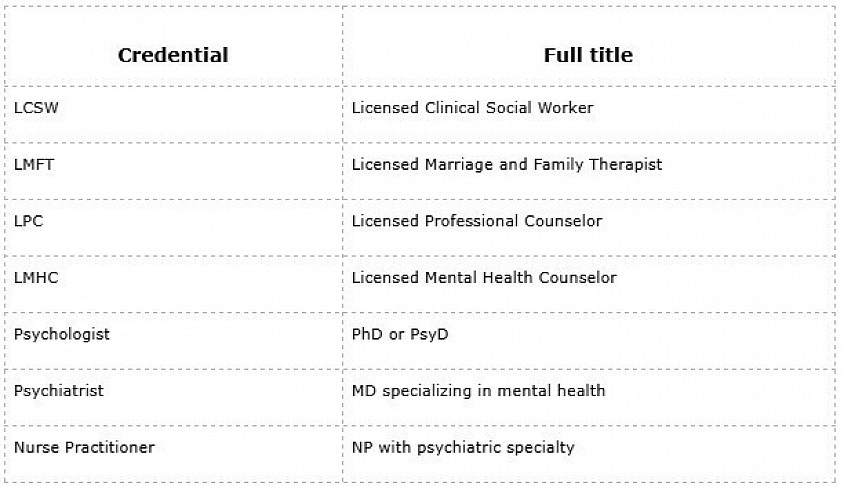
Every credential above shares one requirement. The license must be active in the state where the client lives. Interstate compacts such as PSYPACT are the only route around that rule.
How to Verify an ESA Letter Provider in Arizona
Verifying a provider means confirming the therapist's name, credential title, and license number before you pay anything. Arizona regulates its mental health professions through public licensing boards. A named clinician with a license number can be checked in about a minute. A provider that will not name the clinician cannot be checked.
Credential transparency is what separates a verifiable service from an unverifiable one. RealESALetter.com publishes the name, credential title, and state license number of every therapist on its panel. That disclosure lets a renter run the license check before booking the evaluation, and lets a landlord run the same check afterward.
Your landlord reads the letter looking for four things. The therapist's name and credentials. The license number and issuing state. A signature and date of issue. A statement linking the animal to a diagnosed condition. A letter missing any of them invites a challenge.
Comparison helps here. How an esa letter Arizona online service structures its screening, its clinician panel, and its delivery timeline gives a renter a clear basis for choosing.
Red Flags That Signal a Fake ESA Letter Service
The clearest red flag is any service that issues a letter without a live evaluation. A document produced with no clinical contact has no clinical basis. The following signals are all visible before you pay:
- Instant approval. A letter delivered within minutes of a form submission involved no consultation.
- Registries and certificates. No federal or state registry of emotional support animals exists in the United States.
- No named clinician. A letter signed by a company name rather than a person cannot be verified.
- No license number. Landlords look for this first, so its absence invites rejection.
- Therapists licensed elsewhere. A therapist licensed only in another state cannot evaluate an Arizona resident unless an interstate compact covers it.
- ID cards and vests sold as proof. The animal does not need to be professionally trained, certified, or registered anywhere.
Arizona ESA Laws and What Landlords Must Do
Arizona landlords must accommodate a tenant who presents a valid ESA letter, and they cannot charge pet fees for the animal. The Fair Housing Act requires housing providers to accommodate tenants with qualifying mental or emotional disabilities. They cannot apply breed restrictions or weight limits. They cannot refuse housing based on the animal.
The protection has clear edges. An ESA letter covers housing only. It does not provide public access rights to stores or restaurants. Airlines are no longer required to accommodate emotional support animals in the cabin. A psychiatric service dog letter covers those situations with a task-trained dog.
RealESALetter.com letters comply with Arizona ESA laws and the federal Fair Housing Act. Every letter includes the credentials a housing provider is entitled to review. That detail separates a document that gets accepted from one that gets questioned.
Tenants who want the full detail on Arizona emotional support animal laws can see how the federal statute interacts with standard Arizona lease terms.
What to Do If an Arizona Landlord Rejects Your ESA Letter
A rejected letter goes to your state civil rights or human rights agency, which remains fully active in enforcing housing law. Submit your accommodation request in writing first. Keep a dated copy of the request and every response. Written records decide these cases.
The FHA statute has not changed. Only HUD's enforcement posture changed in May 2026, when HUD announced it will no longer pursue ESA housing complaints where the animal is not individually trained to perform disability-related tasks. State enforcement remains fully active. The obligation on Arizona landlords is what it was before that announcement.
That shift makes a genuine clinical evaluation more important than ever. A letter backed by a real evaluation and a verifiable license holds up under scrutiny. HUD remains available as a secondary route once the state agency path is underway.
What the Arizona ESA Letter Process Looks Like With a Licensed Provider
The process is a screening questionnaire, a live consultation with an Arizona-licensed therapist, and a signed letter. A legit ESA letter in Arizona rests on two fundamentals: an active license and a real evaluation. Here is how the sequence runs:
- Screening. A short questionnaire covers your history, your daily symptoms, and how the animal helps.
- Consultation. An Arizona-licensed therapist reviews your case by video or phone call.
- Clinical decision. The therapist issues the letter only when it is clinically appropriate.
- Delivery. A signed letter arrives within 24 hours of a completed evaluation.
- Validity. The letter stays valid for 12 months from the date of issue.
Arizona adds no waiting requirement. Five states require a 30-day client-provider relationship before an ESA letter can be issued. Arizona is not one of them, so residents can complete the evaluation and receive the letter without that step.
RealESALetter.com matches renters with licensed therapists in their state and delivers signed letters within 24 hours of a completed evaluation. The evaluation is the product, and the letter documents a clinical outcome rather than a purchase.
Renewal matters too. Most landlords require documentation issued within the past year, so an annual renewal keeps the letter enforceable. Renters can also read how to confirm an online ESA letter is legitimate and apply that standard to every provider on their shortlist.
Choosing an Arizona ESA Letter Provider You Can Verify
Verifiable licensing is the one criterion that settles all the others. A named therapist with an active Arizona license, plus a documented evaluation, produces a letter a housing provider has to take seriously. The Fair Housing Act obligation on Arizona landlords is unchanged, and state enforcement remains fully active. Ask any provider for the clinician's name, credential title, and license number before you pay.
Frequently Asked Questions
Are online ESA letters legal in Arizona?
Online ESA letters are legal in Arizona when the therapist holds an active Arizona license. Delivery method does not affect validity. The evaluation and the license are what a landlord can question.
Who can write an ESA letter in Arizona?
A Licensed Mental Health Professional must write an ESA letter in Arizona. Qualifying credentials include LCSW, LMFT, LPC, psychologist, and psychiatrist. The license must be active in Arizona or covered by an interstate compact.
Does Arizona require a waiting period before an ESA letter is issued?
Arizona imposes no client-provider relationship period before an ESA letter can be issued. Five states do impose one. Arizona is not among them.
Can an Arizona landlord charge a pet deposit for an emotional support animal?
Arizona landlords cannot charge a pet deposit or monthly pet rent for a valid emotional support animal. The Fair Housing Act prohibits both charges. Breed restrictions and weight limits also do not apply.
How long is an ESA letter valid in Arizona?
An ESA letter remains valid for 12 months from the date of issue. Most landlords require documentation issued within the past year. An annual renewal keeps the letter enforceable.
Does an ESA letter give public access rights in Arizona?
An ESA letter covers housing only under the Fair Housing Act. Stores, restaurants, and airline cabins sit outside its scope. A task-trained psychiatric service dog covers public access instead.